
Bathroom Tile Ideas & Inspiration: Styles, Colours & Designs for Every Home
Bathroom tiles play a huge role in how a bathroom looks and feels. From setting the overall style to influencing light, space, and even how easy the room is to maintain, the right tiles can completely transform a bathroom.
However, with so many different styles, colours, and designs available, it’s not always easy to choose the best tiles for your space.
In this guide, we’ve put together bathroom tile ideas and inspiration to help you explore popular styles, colour choices, and design options. From modern and minimalist to traditional and bold, you’ll find ideas to suit every type of bathroom and every home.
Popular Bathroom Tile Styles
Bathroom tile styles help define the personality of the space. Whether you prefer a clean, modern look or something more classic, choosing a clear style direction makes it easier to create a cohesive bathroom.
Modern Bathroom Tile Ideas
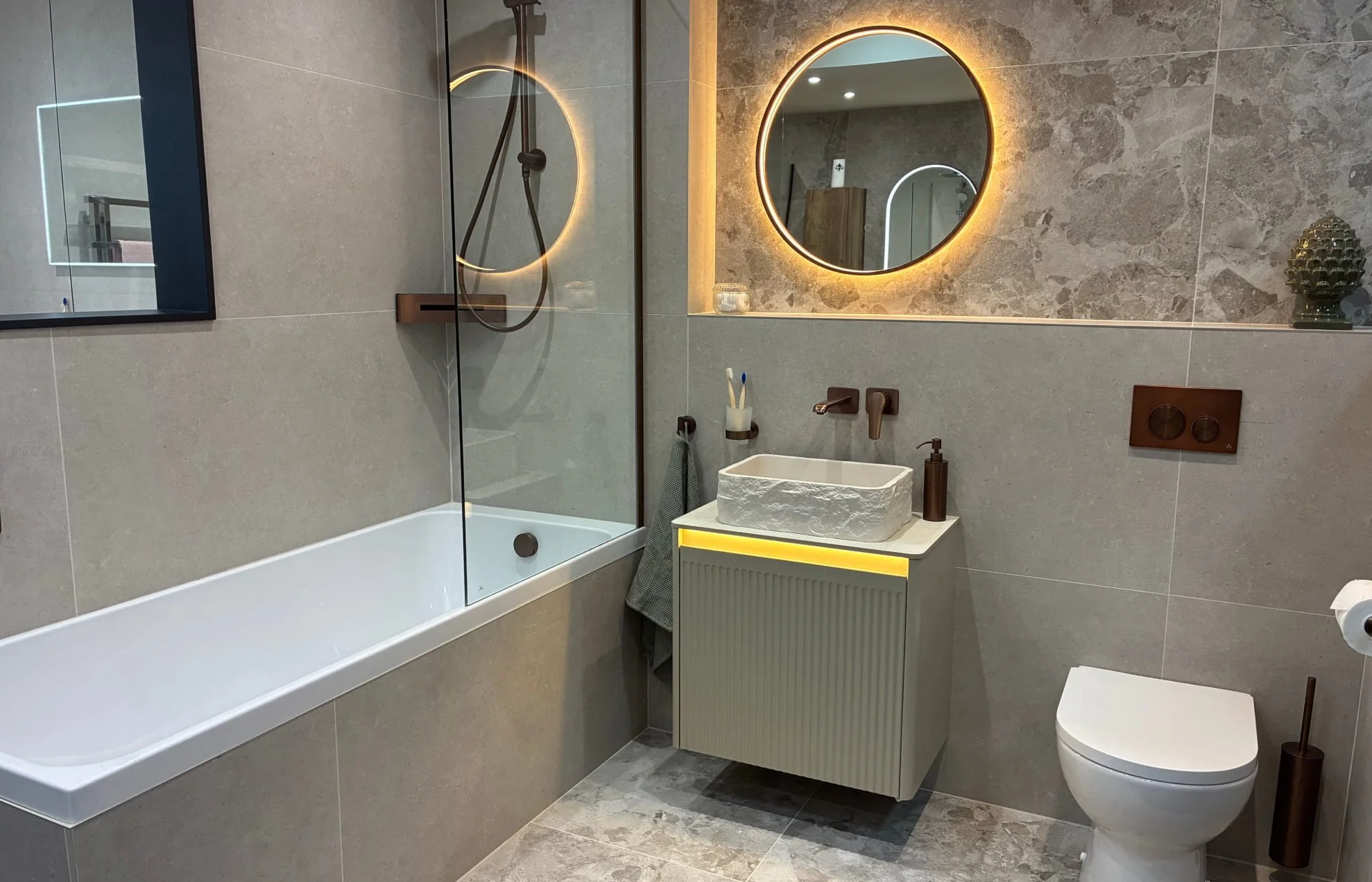
Modern bathroom tiles focus on simplicity and clean lines.
Popular features include:
Large‑format tiles with minimal grout lines
Neutral colours such as grey, white, and stone
Matte finishes for a soft, contemporary look
Modern tiles work particularly well in minimalist bathrooms, helping create a calm and uncluttered feel.
Traditional Bathroom Tile Ideas
Traditional bathroom tiles are inspired by classic design and timeless finishes.
Common choices include:
Metro tiles laid in brick or herringbone patterns
Patterned floor tiles
Soft whites, creams, and pastel tones
This style suits period properties and anyone looking for a bathroom that won’t date quickly.
Contemporary & Designer Tile Styles
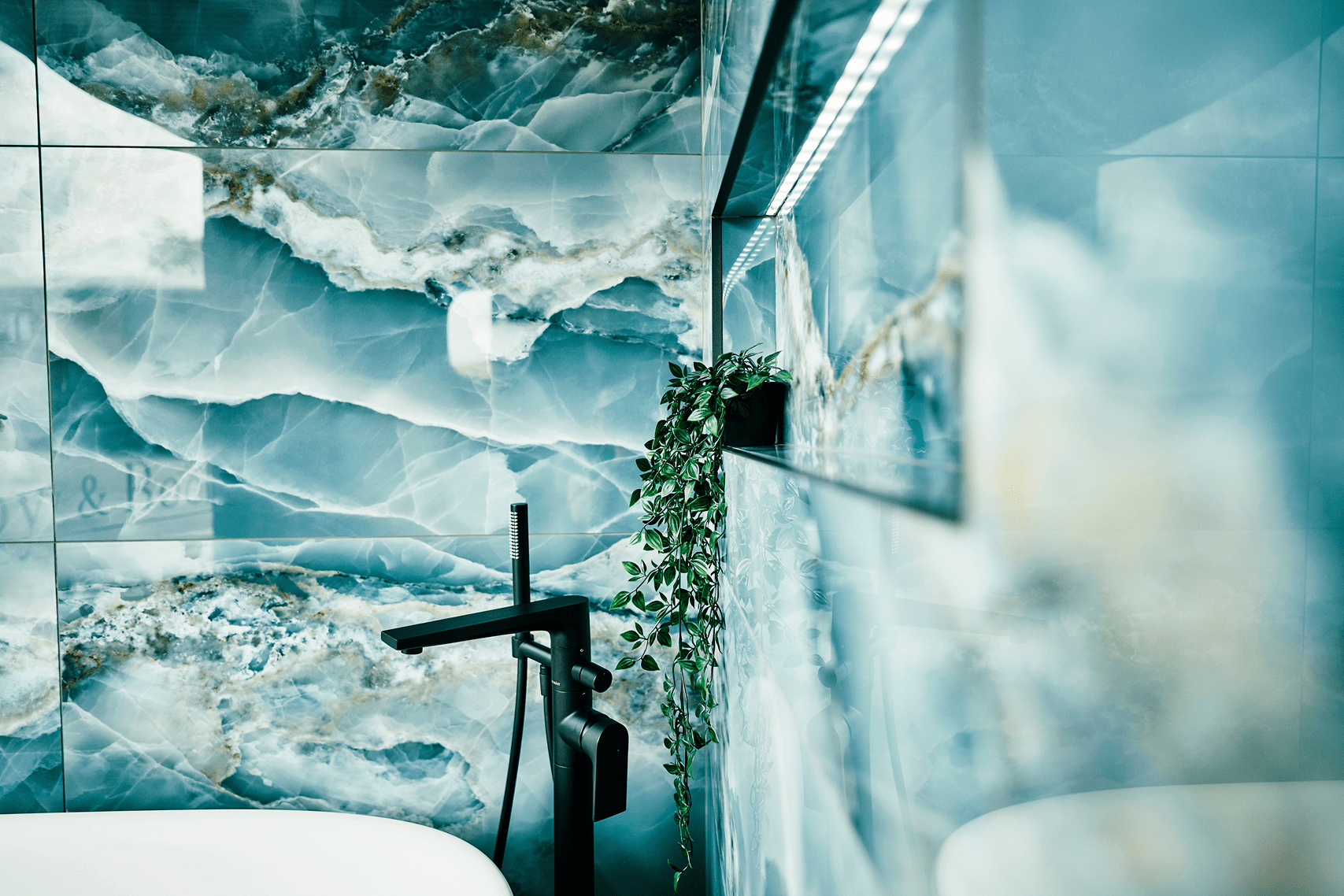
Contemporary tile styles allow for more creativity and personal expression.
Popular ideas include:
Feature walls using bold colours or patterns
Marble‑effect or textured tiles
Mixing finishes for contrast
Designer tile styles are ideal if you want to create a statement bathroom while still maintaining a polished, modern look.
Choosing a Tile Style That Suits Your Home
When selecting a tile style, it’s worth considering the rest of your home. Choosing tiles that complement nearby rooms helps create a natural flow, especially in en‑suites and downstairs bathrooms.
Bathroom Tile Colour Ideas
The colour of your bathroom tiles has a big impact on the overall mood of the space. It can make a bathroom feel brighter, larger, warmer, or more dramatic depending on the tones you choose.
Neutral Bathroom Tile Colours
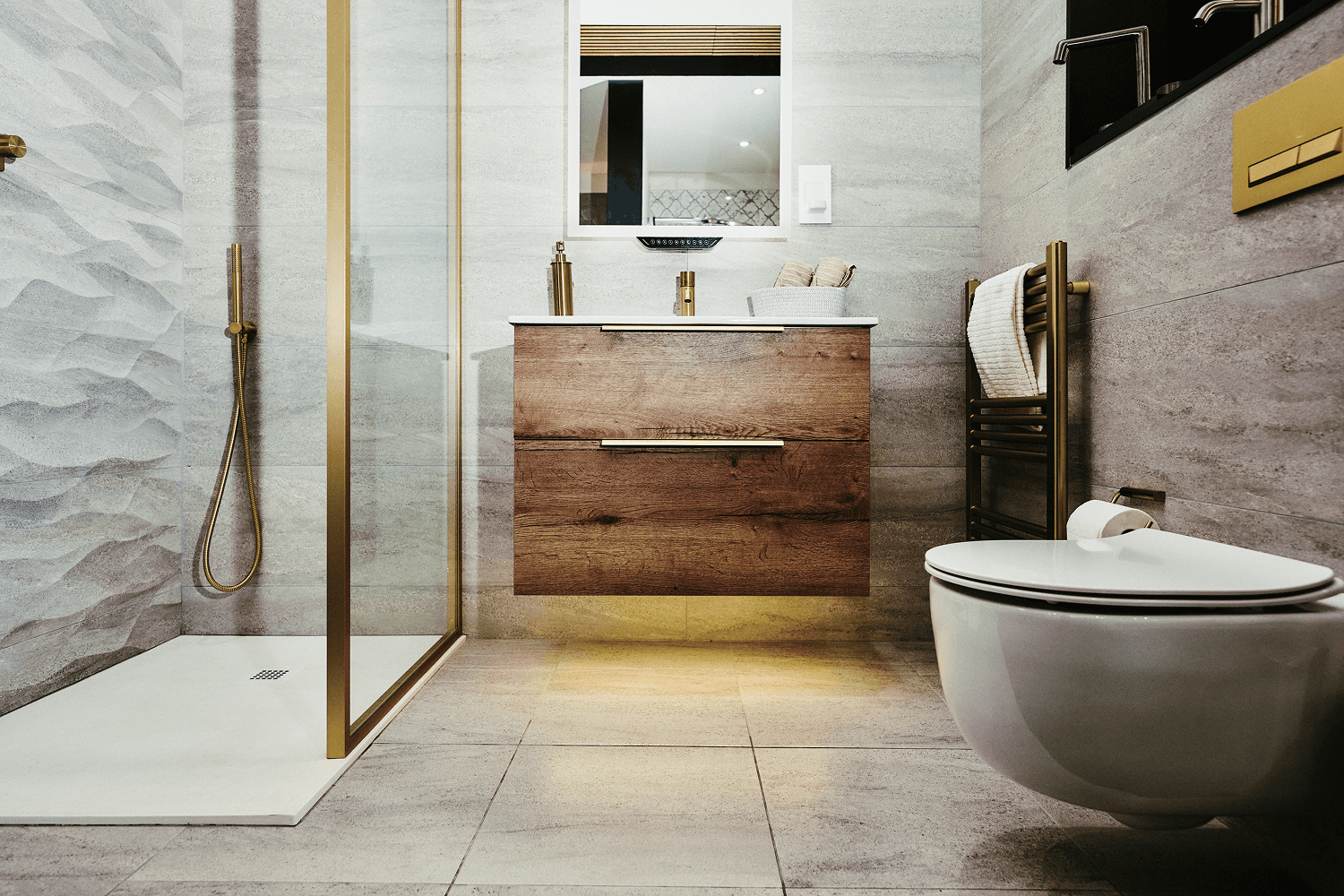
Neutral tiles are a popular and timeless choice for bathrooms.
Common options include:
White
Grey
Beige and stone tones
Neutral bathroom tile colours work well in both small and large bathrooms. They reflect light, feel clean and fresh, and provide a versatile base that works with almost any furniture or finish.
Dark Bathroom Tile Ideas
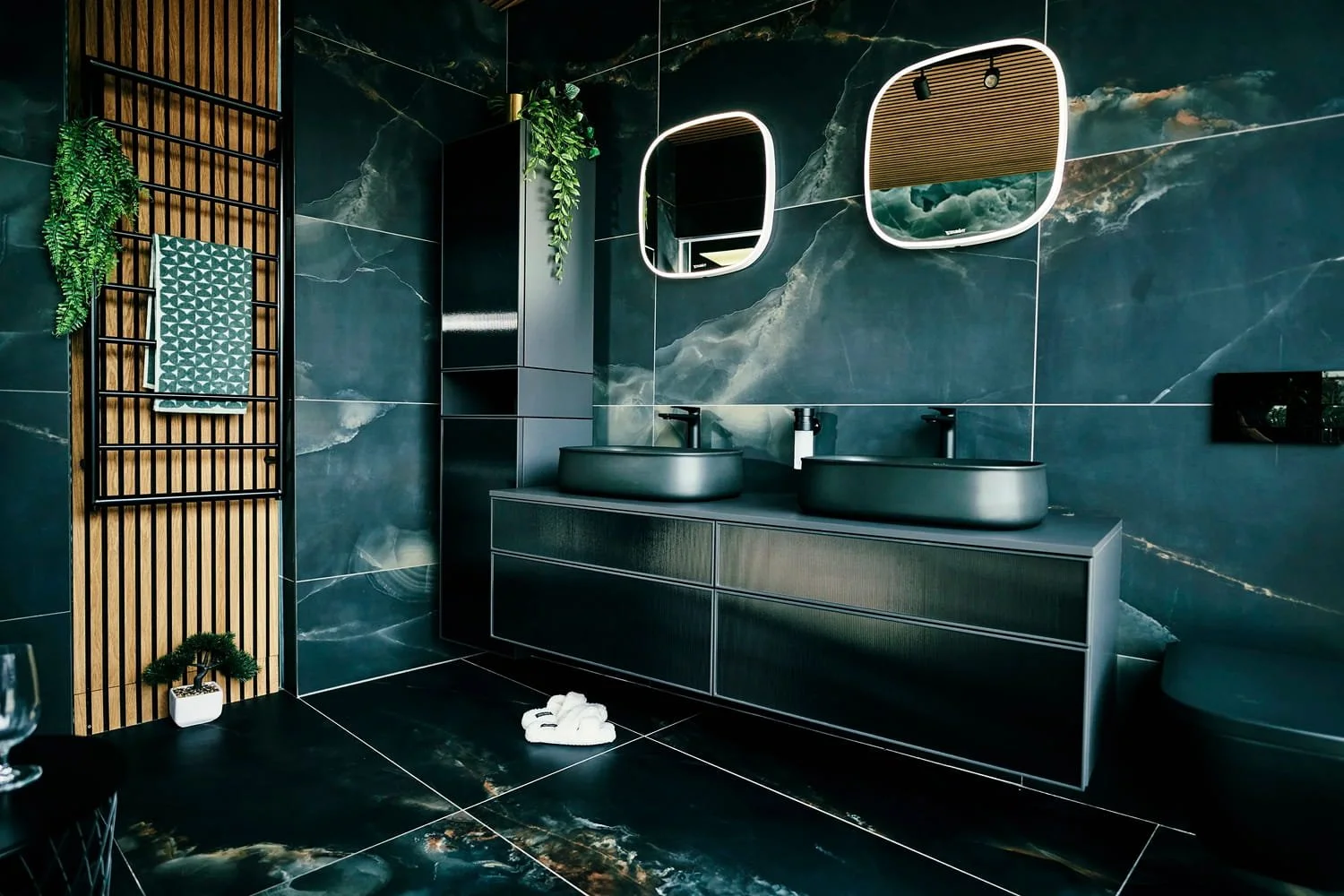
Dark tiles can create a bold, luxurious feel when used thoughtfully.
Popular dark shades include:
Charcoal and deep grey
Black
Navy and deep green
Dark bathroom tiles work best in well‑lit spaces or when balanced with lighter tiles, brass fittings, or wood‑effect finishes to prevent the room from feeling too enclosed.
Light Bathroom Tile Ideas
Light‑coloured tiles are ideal for creating a sense of space and brightness.
These tiles are particularly effective in:
Small bathrooms
En‑suites
Rooms with limited natural light
Light tiles help bounce light around the room and can make compact bathrooms feel larger and more open.
Bold and Colourful Bathroom Tile Ideas
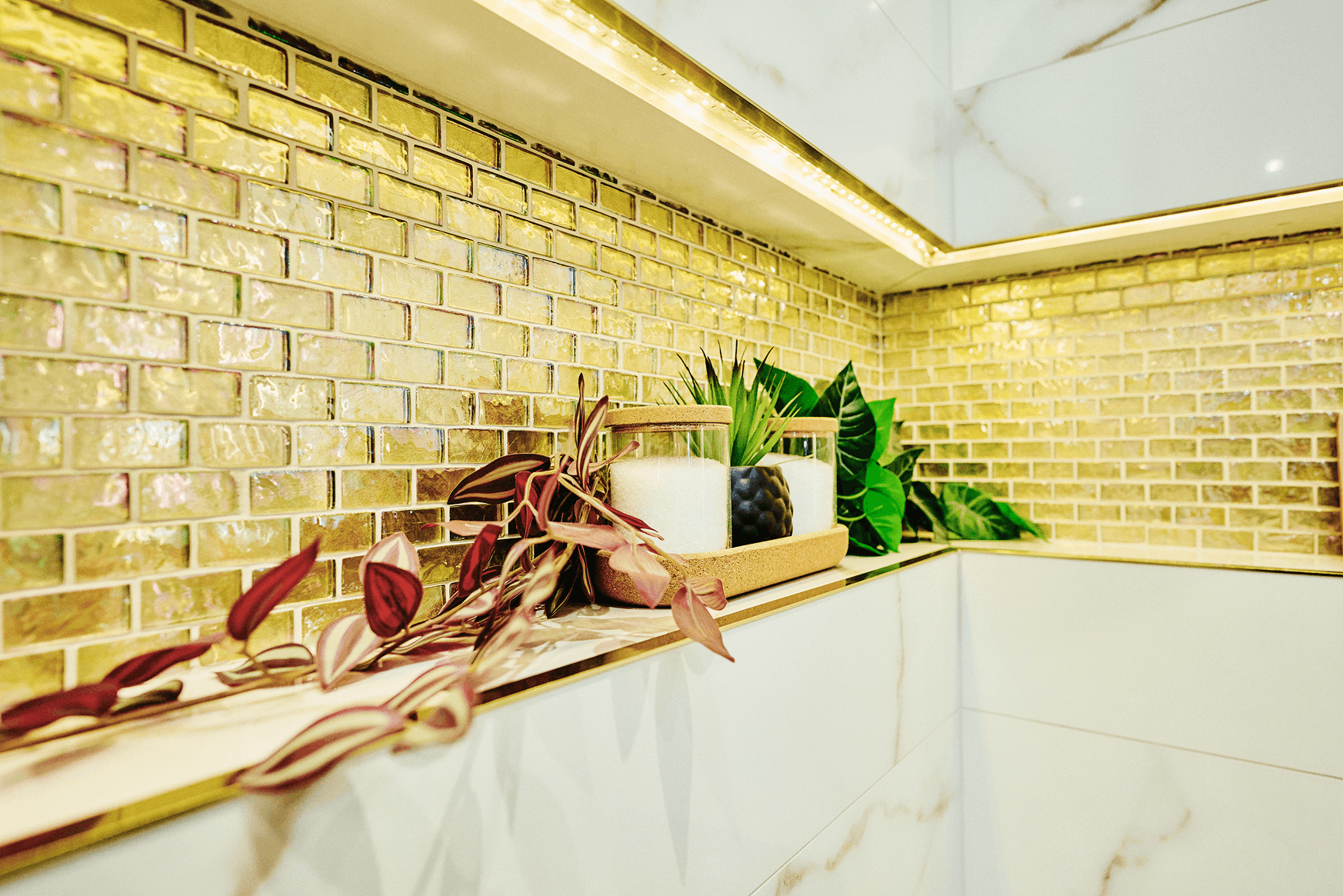
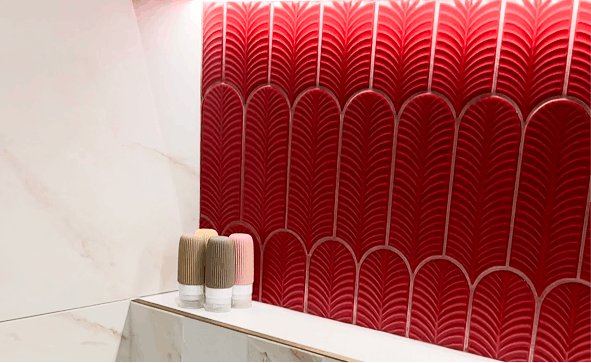
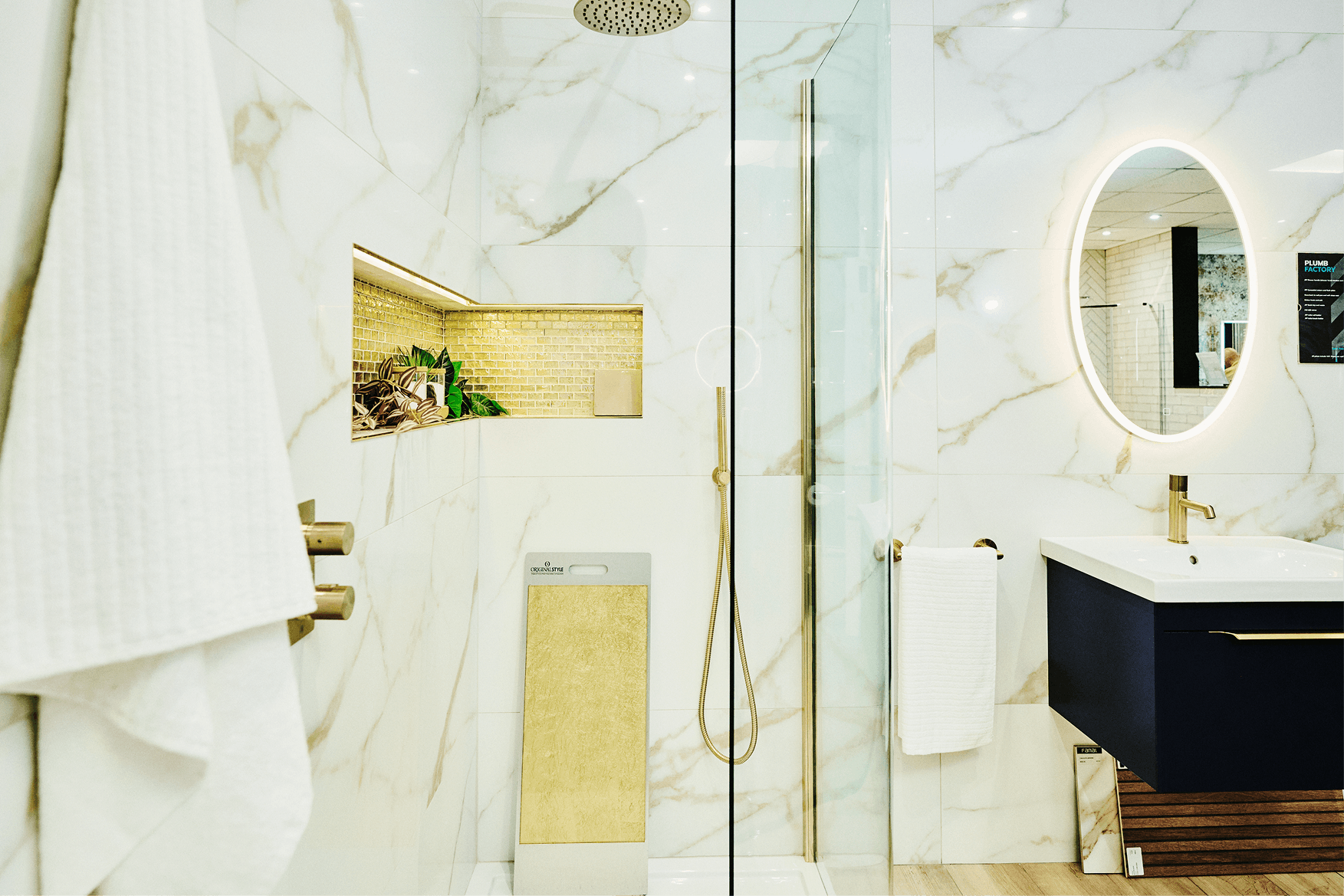
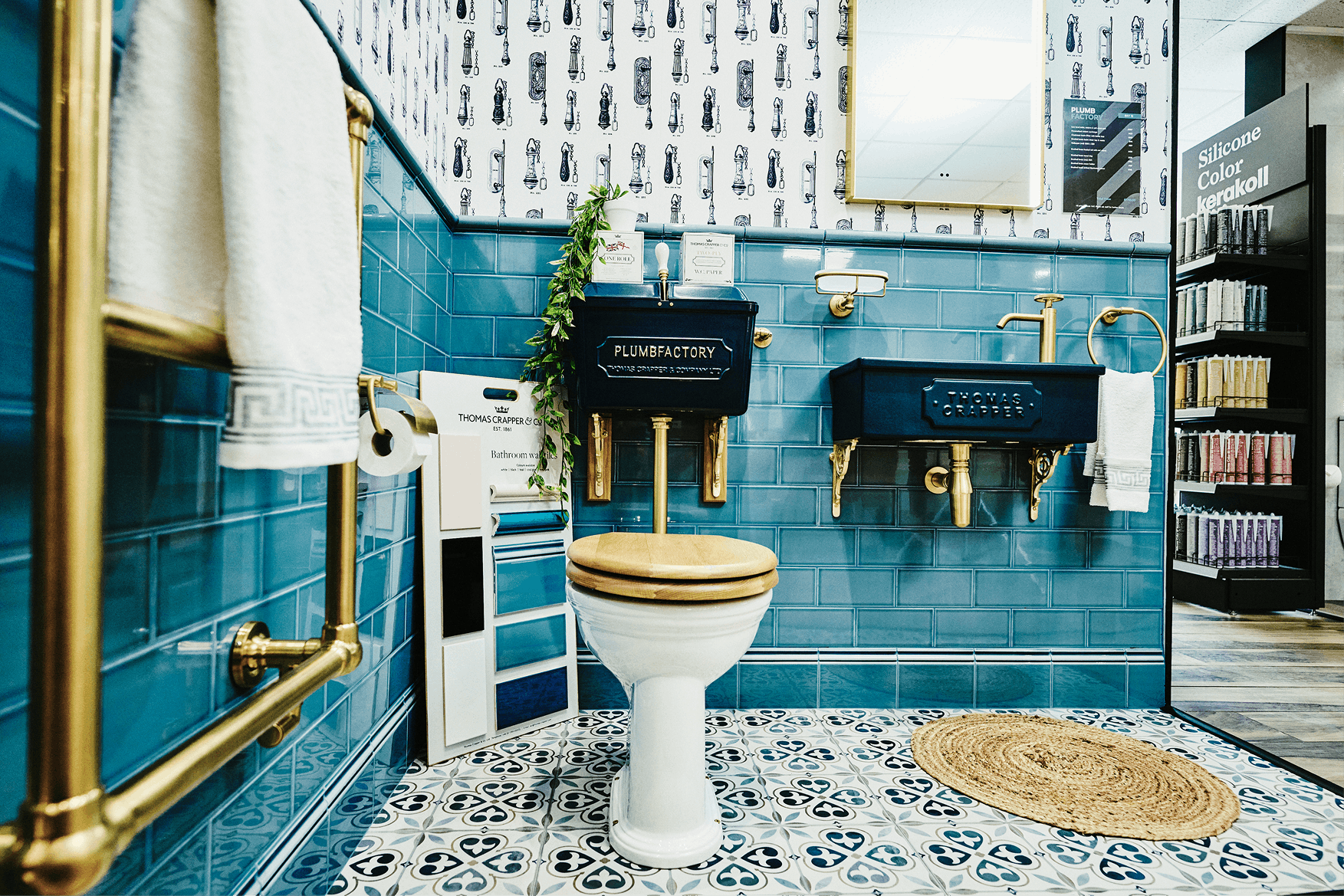
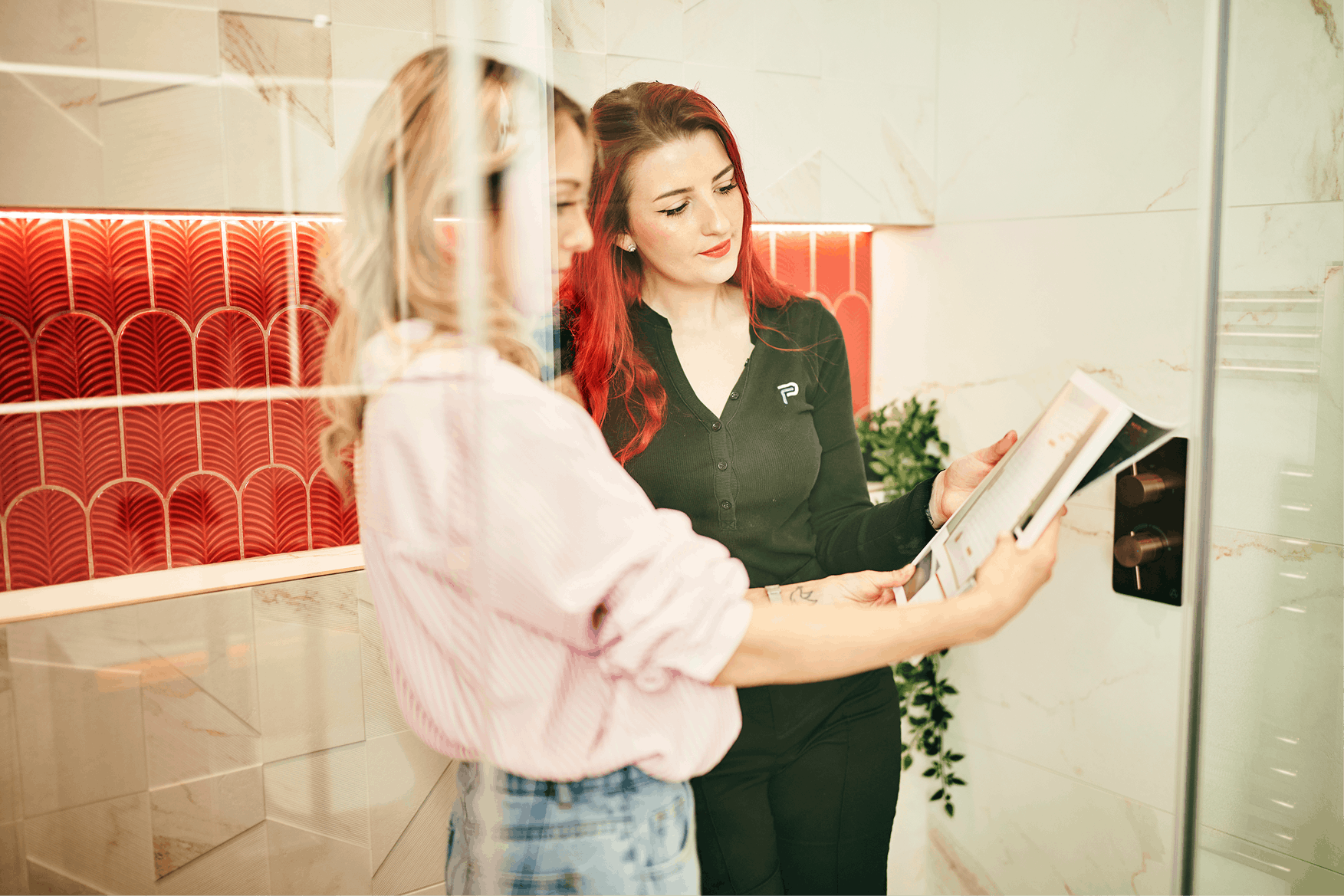
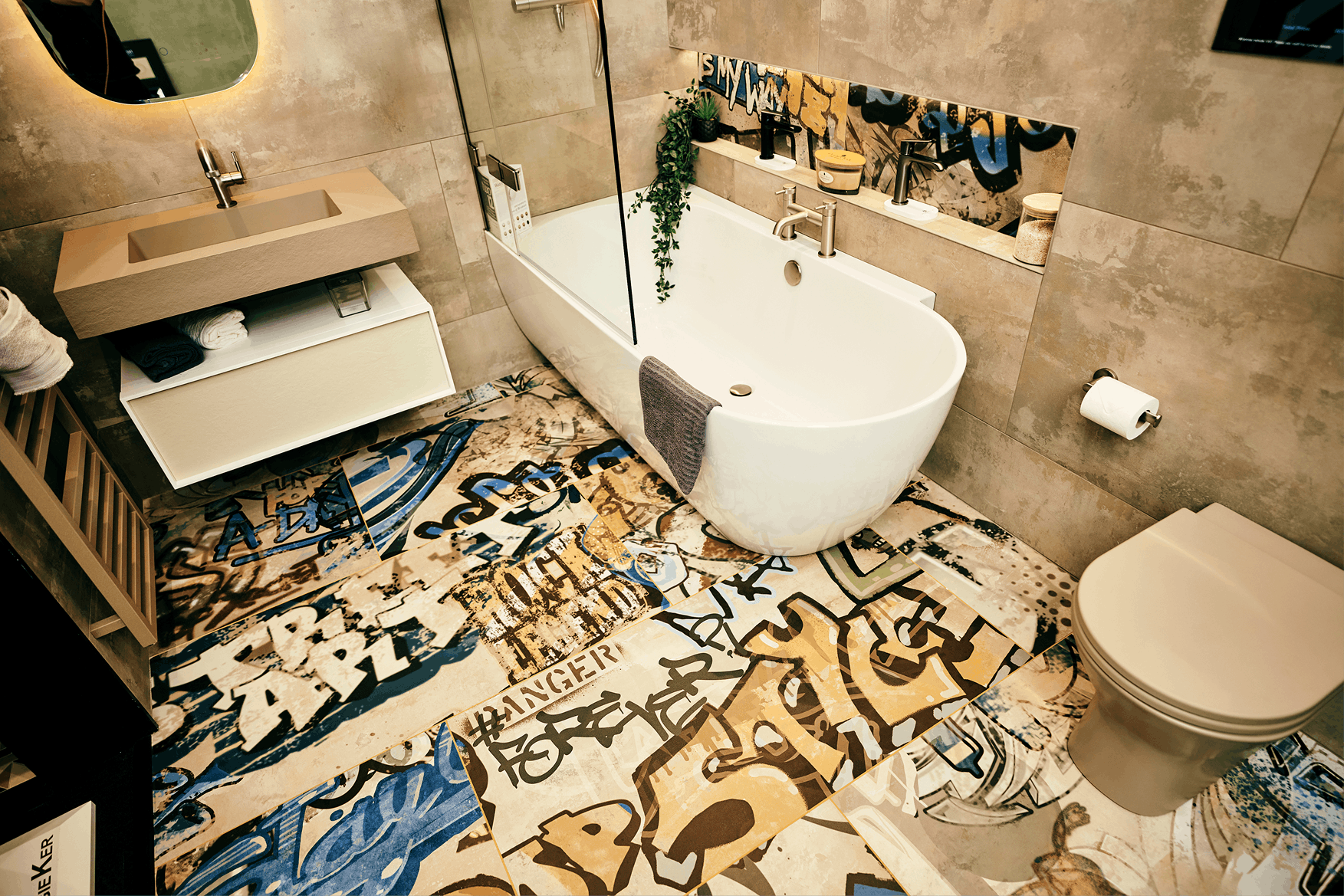
For those wanting to add personality, bold tiles can make a strong design statement.
Popular colour choices include:
Soft greens and sage tones
Blue shades inspired by nature
Warm terracotta and earthy hues
Bold tiles work well as feature walls, shower enclosures, or splashbacks, allowing colour without overwhelming the space.
Mixing Tile Colours Successfully
Combining different tile colours can add depth and interest. A common approach is to use lighter tiles on walls and darker tiles on floors, helping anchor the space while keeping it bright.
Bathroom Tile Designs & Patterns
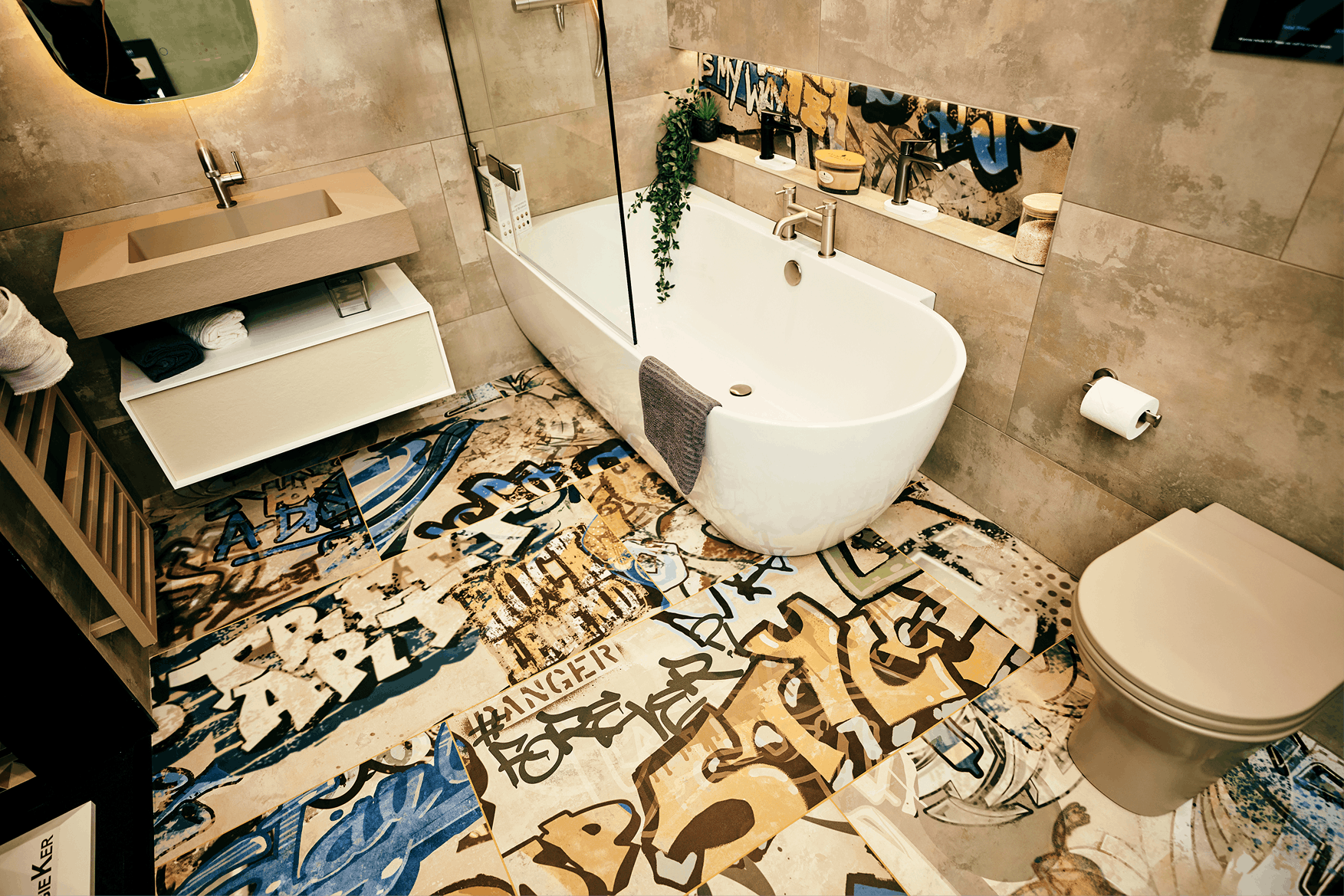
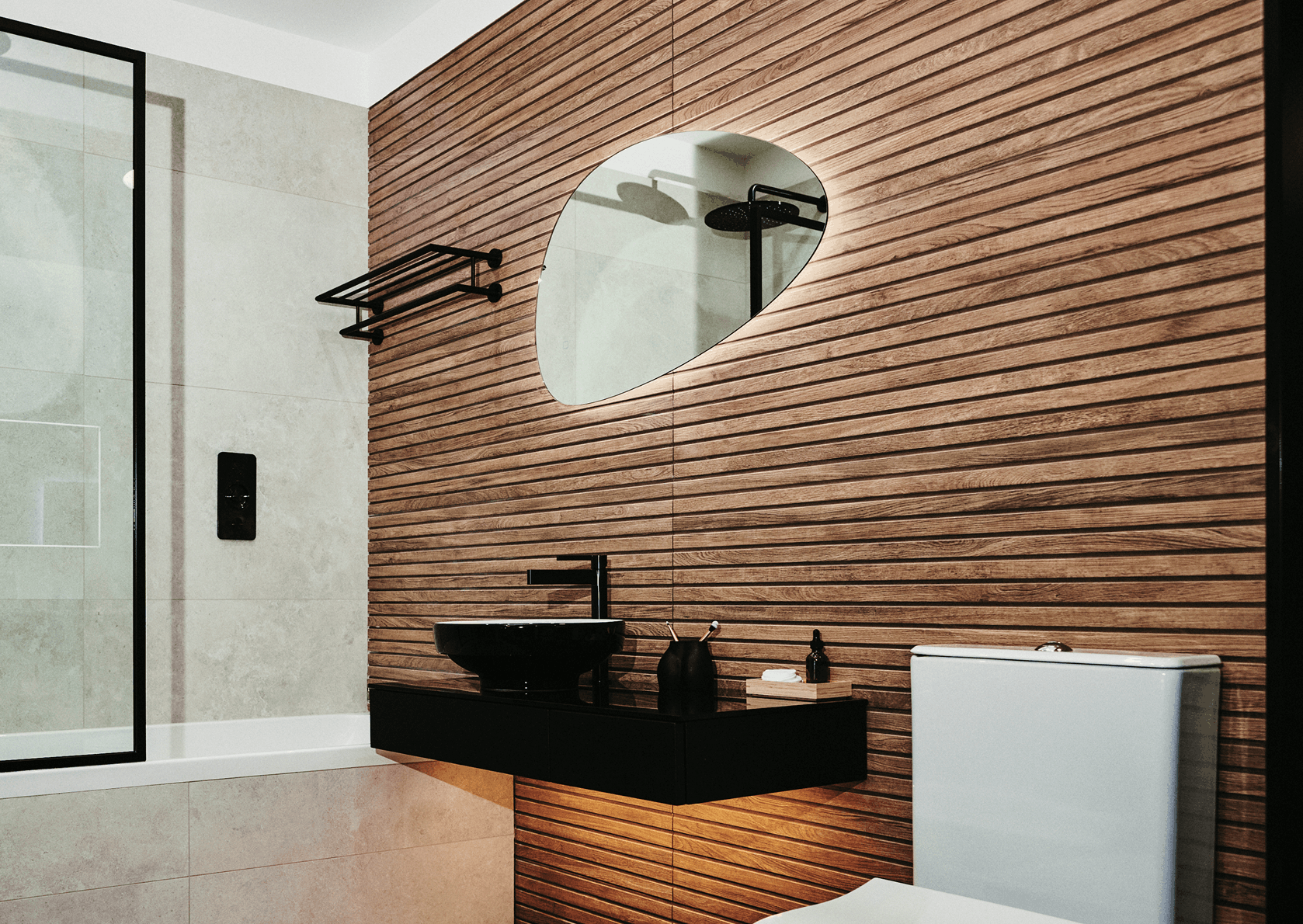
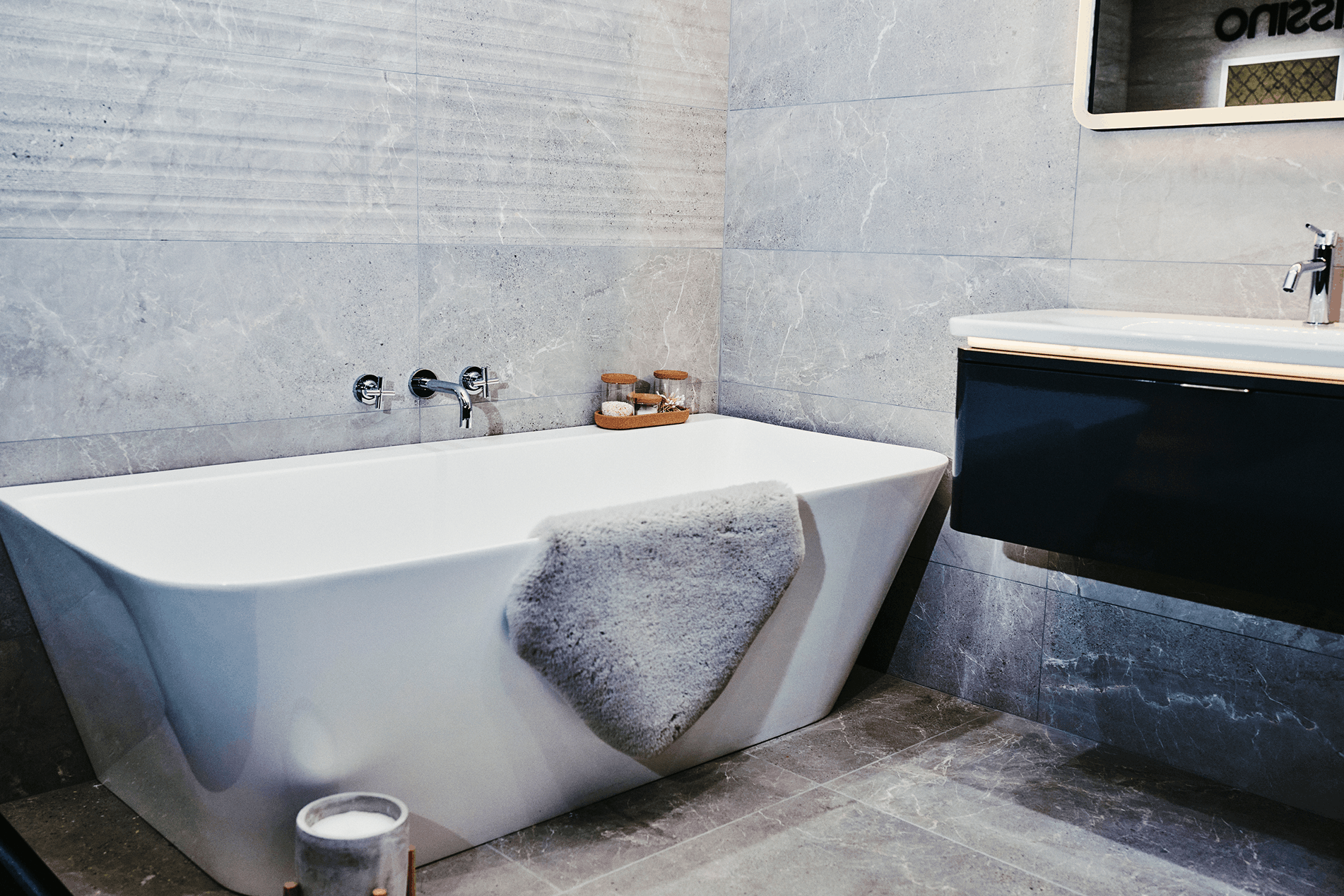
Tile design and pattern are where personality really comes into play. While colour sets the mood, the design of a tile determines how the space feels, whether that’s calm and understated or bold and full of character.
Patterned Tiles
Patterned bathroom tiles are a popular choice for adding interest without relying on bright colours. Often used on floors or as a feature wall, patterned tiles work best when balanced with simpler wall tiles to avoid overwhelming the space. In smaller bathrooms, using pattern in one area can create a focal point while keeping the rest of the room light and open.
Marble-Effect Tiles
Marble‑effect tiles are ideal for homeowners who want a luxurious look without the maintenance of natural stone. These tiles bring a sense of elegance to bathrooms of all sizes and work beautifully in both modern and traditional spaces. Large marble‑effect tiles can also help reduce grout lines, giving a cleaner and more seamless finish.
Wood-Effect Tiles
For a warmer, more natural feel, wood‑effect bathroom tiles are a great option. They introduce the texture and tone of real wood while remaining fully water‑resistant and easy to maintain. Wood‑effect tiles are often used on floors or feature walls and pair particularly well with neutral or earthy colour palettes.
Textured & 3D Tiles
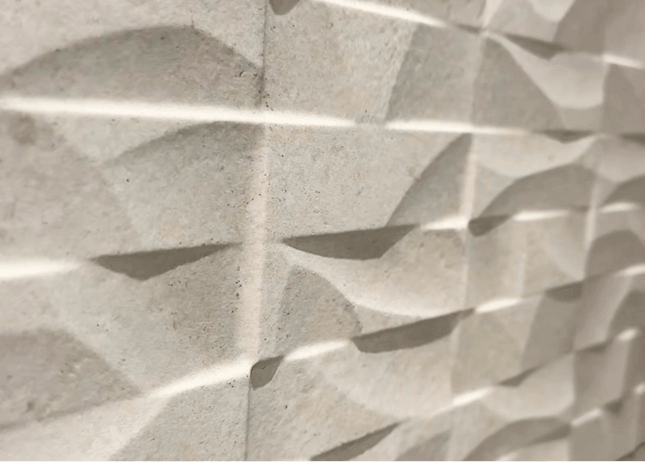
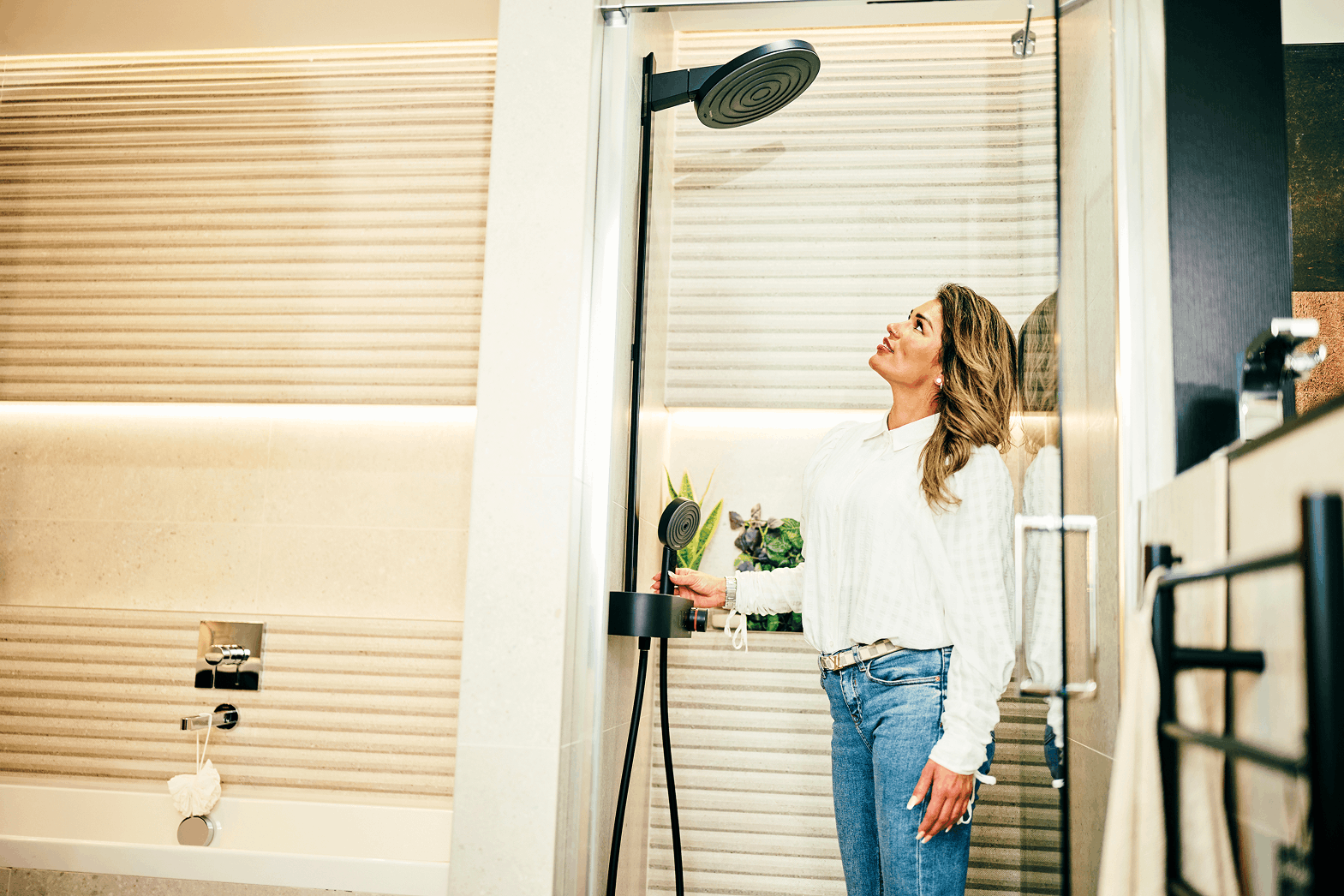
Textured and 3D tiles are becoming increasingly popular for creating depth and visual interest. These tiles catch the light in different ways throughout the day, adding subtle movement to the room. They’re best used sparingly, such as behind a basin or in a shower area, where they can act as a statement without dominating the design.
Bathroom Tile Ideas for Small Bathrooms
When space is limited, tile choice becomes even more important. The right tiles can help a small bathroom feel brighter, more open, and better proportioned.
Lighter tiles are often the go‑to choice for small bathrooms because they reflect light and create a sense of space. Large tiles can also work surprisingly well, as fewer grout lines help the room feel less busy. Laying tiles vertically can draw the eye upward, making ceilings appear higher, while horizontal layouts can make narrow rooms feel wider.
In compact bathrooms, it’s often best to avoid too many competing tile designs. Keeping walls simple and introducing texture or pattern in one area, such as the shower or floor, can add interest without overwhelming the space.
Floor vs Wall Bathroom Tile Ideas
Although many bathroom tiles can be used on both floors and walls, how and where they’re used makes a big difference to the overall look.
Floor tiles tend to anchor the room, so slightly darker or more textured tiles work well here. Wall tiles, on the other hand, can be lighter and smoother to help reflect light. Using the same tile on both walls and floors can create a seamless, spa‑like effect, while contrasting tiles can help define different zones within the bathroom.
Slip resistance is also an important consideration for floor tiles, particularly in family bathrooms or wet rooms.
Choosing the Right Bathroom Tiles
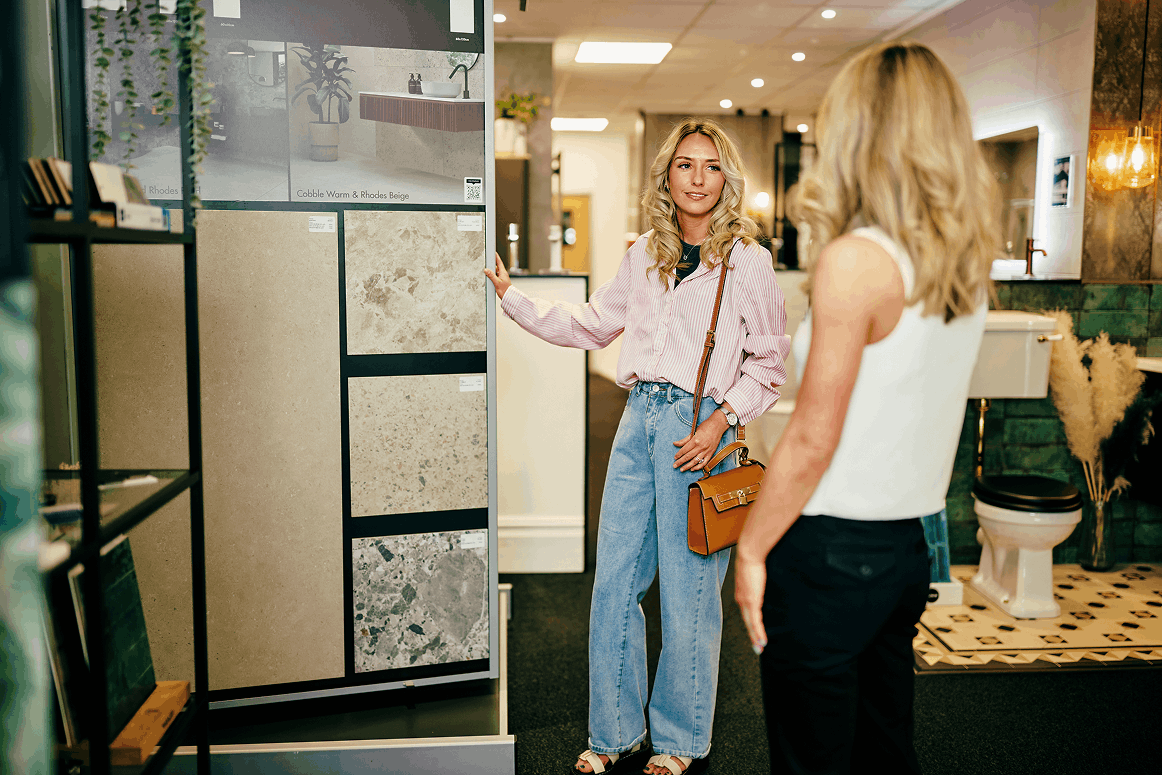
With so many beautiful tile options available, it can be tempting to choose purely based on appearance. While style is important, the best bathroom tiles are those that suit both the look of your space and the way it’s used day to day.
Bathrooms are high‑moisture environments, so durability and water resistance should always be part of the decision. Tiles designed specifically for bathroom use are made to cope with humidity and regular cleaning, helping them maintain their appearance over time. For busy family bathrooms, easy‑to‑clean finishes can make a noticeable difference to everyday upkeep.
Tile size also plays a role in how a bathroom feels. Larger tiles often create a calmer, more streamlined look, while smaller tiles can add texture and detail. The key is finding a balance that suits the scale of the room without making it feel cluttered or overly busy.
Grout colour is another detail that can subtly transform the finished look. Matching grout creates a seamless appearance, while contrasting grout can highlight tile shape and layout. This small design choice can completely change the character of a bathroom.
Finally, it’s worth thinking about how tiles will work alongside your bathroom furniture, fittings, and lighting. Seeing everything together at the planning stage helps ensure the final design feels cohesive rather than pieced together.
Common Bathroom Tiling Mistakes to Avoid
Even the most beautiful tiles can fall short if they’re not used thoughtfully. One of the most common mistakes is overloading a bathroom with too many different tiles. While variety can be appealing, too many colours or patterns can make a space feel chaotic, especially in smaller bathrooms.
Another common issue is choosing tiles without considering lighting. Dark or heavily textured tiles can absorb light, making a room feel smaller or darker than expected. Balancing these tiles with lighter surfaces or good lighting can prevent this.
It’s also important not to overlook practicality. Floor tiles should offer adequate slip resistance, and wall tiles in shower areas should be suitable for constant water exposure. Focusing only on aesthetics can lead to disappointment once the bathroom is in everyday use.
Careful planning before purchasing helps avoid these problems and ensures the finished bathroom looks as good as it functions.
Why Bathroom Design Matters
Tiles rarely exist in isolation. Their true impact comes from how they work with the rest of the bathroom, from furniture and sanitaryware to lighting and layout.
Planning your bathroom design before buying allows you to see how tile choices fit into the wider space. It helps prevent clashes, improves balance, and ensures your tiles enhance the overall design rather than dominate it.
At Plumb Factory, our free bathroom design service helps customers visualise their bathroom layout and tile choices before committing, making it easier to create a space that feels considered and well‑planned.

Finding the Right Bathroom Tile Inspiration
Bathroom tiles form the foundation of any bathroom design. Whether you prefer modern simplicity, classic elegance, or bold statement tiles, the right choice can completely transform your space.
By exploring different styles, colours, and designs, and by considering how tiles work with lighting, layout, and everyday use, you can create a bathroom that feels both beautiful and practical.
Taking the time to plan your design before purchasing helps ensure your bathroom upgrade is something you’ll enjoy for years to come.
Bathroom Tile FAQs
What are the best tiles for a bathroom?
The best tiles for a bathroom are those designed to handle moisture, humidity, and regular cleaning. Porcelain and ceramic tiles are particularly popular because they’re durable, water‑resistant, and easy to maintain, making them suitable for both walls and floors in most bathrooms.
What bathroom tiles are best for small bathrooms?
In small bathrooms, lighter tiles tend to work best as they reflect light and help the space feel more open. Larger tiles can also be a good choice, as fewer grout lines create a calmer, less cluttered appearance. Keeping tile designs simple and using pattern sparingly can prevent a compact bathroom from feeling overwhelming.
Do large tiles work in small bathrooms?
Yes, large tiles can work very well in small bathrooms. When used thoughtfully, they reduce the number of grout lines, which can make the room feel larger and more cohesive. The key is choosing a tile size that suits the proportions of the space and pairing it with a simple layout.
What colour bathroom tiles make a bathroom look bigger?
Light colours such as white, cream, soft grey, and pale beige are particularly effective at making a bathroom look bigger. These tones reflect light and create a sense of openness, which is especially useful in bathrooms with limited natural light.
Are patterned bathroom tiles still in style?
Patterned bathroom tiles remain a popular design choice, especially when used as a feature rather than across the entire space. Patterned floors or feature walls can add character and personality, while surrounding them with simpler tiles helps maintain balance.
Is it better to use the same tiles on bathroom floors and walls?
Using the same tiles on both floors and walls can create a seamless, spa‑like look and works especially well in modern bathrooms. However, contrasting tiles can also be effective for defining different areas within the room, as long as the colours and finishes work well together.
How do I choose bathroom tiles that won’t date quickly?
Choosing neutral colours, simple designs, and classic finishes is a good way to create a timeless bathroom. You can then add personality through accessories or feature areas that are easier to update in the future.